


Material bottlenecks holding you up? We fix that.
LIFT coordinates everything that moves material on your floor, following the process you define.
Every delay has a cause. Most have several.
Material has to reach the right place at the right time. When it doesn’t, lines wait, people improvise, and costs pile up. There’s typically not just one reason, but one of the most common is automation that’s bought and managed one vendor at a time.
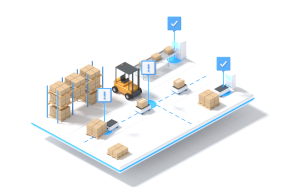
What it looks like on the floor.
Over two weeks inside a customer’s facility, Flexware Innovation engineers logged every issue they found. If you run automation from more than one vendor, some of this will look familiar:
- AMRs stuck until someone walks over to free them
- Standoffs, where two vehicles meet and neither yields
- Robots losing track of where they are
- Safety sensors stopping vehicles for obstacles that aren’t there
Each vendor’s fleet manager handles doors, traffic, and priority its own way, and none of them talk to each other. That shows up as late material, skilled people restarting equipment, and a total cost of ownership that keeps climbing.
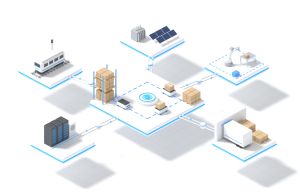
Why Flexware Innovation.
We’ve spent three decades inside plants and warehouses, so we know what holds up in production and what only works in a demo. You get the software and the team that makes it work, from the first pilot to full scale. LIFT is also backed by Hitachi and plays a central role in its push to connect physical operations with the systems that run them.
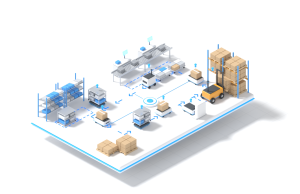
What changes with LIFT.
Right now, your operation bends to fit every vendor’s process. LIFT flips that. You decide how material should move, and every fleet falls in line.
- Goods reach the people who need them, faster
- Consistent deliveries that keep lines running
- Smarter use of space, including kitting and marketplace areas
- A clear view of where every resource is and what it’s doing
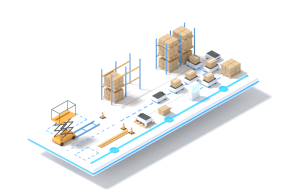
Start small. Scale what works.
You don’t have to overhaul your facility to find out if this is right for you.
- Define the problem. Where is material getting stuck, and what’s it costing you?
- Scope the pilot. One area or process, with success agreed on before anything goes live.
- Prove it. The pilot runs in your facility, with your fleets and your people.
- Scale. Across the facility, then your network, on your timeline.
Every facility is different. Let’s talk about yours.
You’ve seen why fleets break down. What to do about it depends on your floor and your goals. Tell us a little about your operation, and a Flexware specialist will reach out.
Questions we hear most.
No. LIFT sits above them. Each fleet keeps its own software, and LIFT makes sure they all follow one set of rules: yours. What you’ve already invested in stays in place.
No. That’s the whole point. Many facilities end up with more than one vendor for good reasons: different jobs, timelines, and budgets. You should be free to choose the right equipment for each job without taking on a new set of problems every time.
Yes. Most of our customers can’t rebuild either. The goal is to make your automation fit the way your facility already works.
Most pilots run two to three months. One recent project wrapped in four weeks. Every timeline depends on your facility, the problem we’re solving, where it sits on your priority list, and how ready your team is. Once we understand those, you’ll get a realistic estimate.
Usually operations, IT, supply chain, and facilities. Material flow touches all four, so the problem definition should too.
That’s where a pilot starts. We look at how many fleets you run, the ground they cover, and how your facility operates, then work with your team to put a number on it.